
Powering Growth Differently: Shaping a Co-Evolving Energy-Technology Architecture for Oman
By: Jasim Alyamani & Abdullah Al-Abri
Energy planning has been evolving in Oman, as it has internationally. It began (in the early days) largely from the supply side: build generation, expand transmission, deliver fuel, and demand would follow. Over time, this matured into a more balanced approach, with supply and demand considered together through national planning, system economics, long-term forecasting, and infrastructure coordination. That was a major step forward. But as economies become more complex, more electrified, and more sensitive to cost, carbon, flexibility, and resilience, broad national planning alone is no longer enough. The next chapter of energy planning in Oman is not only about scale; it is about precision: designing local energy systems around the places where growth actually happens.
That means moving beyond national averages and broad system planning toward meso- and micro-scale energy architectures built around real demand centers: ports and industrial clusters, oil and gas operational nodes, logistics corridors and strategic growth locations. These are the places where energy demand is concentrated, where infrastructure constraints become visible first, and where competitiveness is won or lost in practical terms.
A local energy hub is, in essence, an integrated energy system configured around a specific location. It aligns electricity, fuels, storage, utilities, flexibility, and enabling infrastructure around the actual needs of that place. This matters because demand is no longer uniform. Different locations need different energy configurations depending on their industrial profile, growth ambitions, reliability requirements, carbon pressures, and future technology pathways.
For Oman, this is becoming increasingly important. The country is positioning itself for industrial expansion, cleaner growth, more sophisticated logistics, and new forms of manufacturing and technology deployment. In that context, having energy resources (alone) is not enough. The more important question is how intelligently those resources are configured around where economic value is being created.
There is an important contrast here. National-scale energy planning provides reach, security, and scale. Local hub planning provides relevance, responsiveness, and fit. One keeps the system strong. The other sharpens the performance of the places that will drive the next phase of growth.
So what should such a hub look like in practice?
A local energy hub in Oman should not be understood as one technology, one fuel, or one project. It should be understood as a coordinated local architecture built around the needs of a concentrated demand center. The starting point is not the asset. It is the demand.
What kind of activity is concentrated there? Heavy industry, logistics, urban growth, mixed-use development, digital infrastructure, or some combination of these? What does the demand profile look like today, and how might it evolve over the next ten to twenty years? These questions matter even more as energy systems shift from centrally dispatched, largely one-dimensional supply models toward more decentralized and multi-dimensional architectures. In that future, demand centers may draw not only on central supply, but also on local generation, multiple forms of storage, flexible demand, and a broader mix of energy sources and vectors. Does the location require firm power, gas, process heat, cooling, backup systems, local renewables, low-carbon fuels, or future flexibility? A strong hub begins by asking these questions and then configuring the energy system accordingly.
Importantly, a local energy hub does not need to begin as a large, fully built, multi-vector system from day one. It can start with something practical and focused: electricity. That may mean conventional grid supply, local renewables, storage, and some degree of flexibility or smart load management. From there, it can grow over time to include gas, thermal systems, common utilities, hydrogen readiness, or other energy vectors as the economics strengthen and the local demand profile matures. This matters because it makes the concept more practical. A local hub is not necessarily a grand one-off undertaking. It can be phased, modular, and scalable.
This is also where the hub model differs from the traditional view of a demand center. A conventional demand center is often treated simply as an endpoint in the energy system – an offtaker to be supplied. A local energy hub should be treated differently. It should not be seen merely as an offtaker at the edge of the system. At its best, it becomes an optimiser at the center of the local system.
That distinction matters. An offtaker consumes. An optimiser coordinates.
A well-designed hub should optimize energy flows, infrastructure use, flexibility, cost, resilience, reliability, and carbon performance across the location. But it can also do something more: it can optimize business activity itself. When companies have better visibility on energy availability, greater flexibility options, and stronger coordination across shared infrastructure, they are in a better position to ramp up, slow down, shift loads, and align operations more intelligently with system conditions. In that sense, the hub is not only improving energy performance. It is improving operating performance.
Once the hub is understood in this way, the role of technology becomes much clearer. If the hub is to optimize rather than merely receive, then physical assets alone will not be enough. It also needs a digital and systems layer capable of making the whole architecture visible, coordinated, and increasingly intelligent.
That digital layer is not there to decorate the hub; it is there to make it perform.
A strong local hub needs a digital foundation that connects data across generation, storage, grid infrastructure, and end users, giving operators real-time visibility of flows, constraints, and flexibility. It also needs interoperable systems that allow different technologies and actors to work together and scale without fragmentation.
On top of that foundation, forecasting, optimization, and intelligent control become increasingly important. The goal is not simply to react after problems arise, but to run the system more predictively and more intelligently. Cybersecurity, governance, and access discipline are equally important, especially where multiple actors share infrastructure and decision-making.
This becomes particularly relevant in high-density environments such as Sohar Port and Freezone, Salalah Port and Freezone, and oil and gas operational nodes, where industrial activity, logistics operations, and energy demand are concentrated at scale. In such places, digital visibility, coordination, and optimization are not just technical improvements. They become part of the competitive proposition and operational resilience of the location itself.
This leads to a broader opportunity for Oman. If local energy hubs are treated as platforms rather than projects, they can become engines for capability building and innovation. Each hub creates a real-world environment in which complex challenges have to be solved: energy integration, system optimization, operational coordination, digital visibility, and resilience. These are practical challenges that require expertise in software, data, AI, cybersecurity, and systems engineering.
Over time, that creates the basis for building local capability across both energy and digital domains. And this capability-building should not be limited by what is already available locally. A smart model combines local talent development with the selective onboarding of global subject matter experts. Where Oman has strengths in engineering, software, operations, or industrial delivery, these can be complemented by international expertise in more specialized areas such as advanced energy systems or large-scale systems integration. This kind of hybrid approach accelerates learning, improves solution quality, and helps ensure that knowledge is transferred into the local ecosystem over time.
Dense industrial and operational environments such as Sohar Port and Freezone, Salalah Port and Freezone, and major oil and gas nodes can therefore act as real-world testbeds where digital systems and energy systems evolve together. That is how capability deepens: not only through policy ambition, but through solving real operational problems in real places.
Over time, solutions developed in one hub can be adapted and replicated across others. What begins as a local intervention can therefore become a scalable national capability. In parallel, well-designed hubs can attract international partners not only as suppliers, but as co-developers of systems, platforms, and operating models.
Local energy hubs should therefore be seen not only as infrastructure initiatives, but as practical engines of competitiveness and technological depth. They offer Oman a way to organize growth more intelligently around the places where value is created.
The future of energy in Oman will not be shaped by supply alone. It will increasingly be shaped by how intelligently we organize energy, infrastructure, and technology around the places where growth actually happens
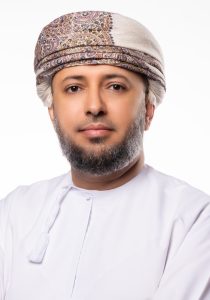
Jasim Alyamani
Jasim Alyamani is strategic technology executive with over 20 years of experience and a strong record in digital transformation, technology strategy, and team leadership with a focus on aligning Technology with business goals, driving innovation, and enhancing operational efficiency to support sustained growth

Dr. Abdullah Sulaiman Al-Abri
Abdullah Al-Abri is the Vice President for Sustainability at SOHAR Port and Freezone. With over 25 years of experience in the energy sector, he has held leadership roles in organizations such as Petroleum Development Oman, Woodside Energy, and the International Energy Agency. He specializes in energy transition, industrial decarbonization, and large-scale infrastructure development, leading multi-billion-dollar initiatives in renewables, hydrogen, and clean technologies. Dr. Al-Abri also contributes to academia and research, focusing on sustainability and systems-based approaches to engineering and development