
Local Hydrogen Market

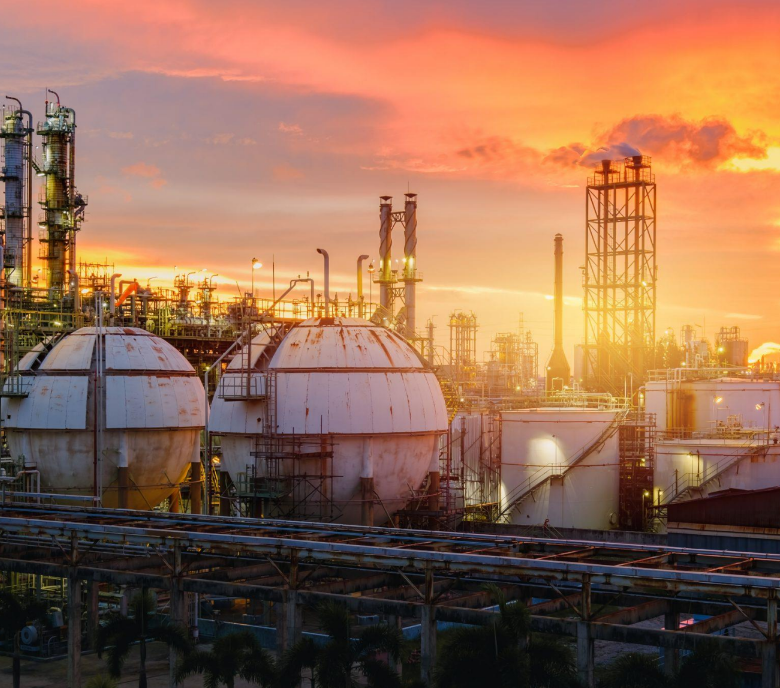
 Creating Oman’s Green Hydrogen Market: From Export Ambition to Domestic Economic Value This initiative captures the outcomes of a national multi-stakeholder roundtable convened by MCREEE on 25 October 2023, aimed at identifying how Oman can reduce green hydrogen development costs while increasing local economic participation across the full hydrogen value chain. The roundtable brought together 53 specialists from government, industry, finance, and academia, organized around four thematic pillars: Innovation & R&D, Capacity Building & Skills, Investment & Financing, and Regulatory & Policy Frameworks. A central message emerging from the discussions is that the absence of a structured local hydrogen market is a key factor undermining cost competitiveness. The majority of participants (82%) agreed that limited domestic utilization increases hydrogen costs by weakening demand, reducing plant utilization rates, delaying economies of scale, and leading to underutilized infrastructure. Heavy reliance on exports also adds logistics and market-access costs, reinforcing the price gap between clean hydrogen and conventional alternatives. As such, the roundtable reframed local hydrogen demand not as a secondary option, but as a core economic lever for reducing costs and improving project bankability. The discussions highlighted that creating a local hydrogen market—through industrial offtake, mobility applications, power generation, and public procurement—can establish a virtuous cycle. Early domestic demand enables higher capacity utilization, attracts private investment, accelerates infrastructure deployment, and lowers unit costs over time. In parallel, clear policy signals around priority hydrogen applications and offtake mechanisms were seen as essential to reduce investor uncertainty and unlock financing. From a localization perspective, the roundtable identified several stages of the value chain where domestic participation can be maximized if local demand exists. Planning and development, procurement and installation, operations and maintenance, and grid integration were highlighted as high-impact areas for job creation and skills development. Manufacturing and material supply offer longer-term industrial potential, while end-of-life management and recycling—though currently limited—were recognized as future opportunities as hydrogen infrastructure scales. These localization pathways are significantly strengthened when hydrogen is consumed domestically rather than produced solely for export. Financing discussions reinforced this linkage. Participants emphasized that bankability challenges stem not only from technology costs, but from uncertain revenue streams in the absence of local offtake markets. Clear demand-side policies—such as offtake mandates, tax incentives, green procurement, and predictable carbon pricing—were identified as critical tools to close the competitiveness gap, de-risk investments, and crowd in private capital across the value chain. Overall, the initiative concludes that Oman’s green hydrogen ambitions will be more resilient, cost-effective, and economically beneficial if local market creation is treated as a strategic priority alongside export development. By anchoring hydrogen production in domestic demand, Oman can accelerate cost reduction, strengthen local value creation, and build a scalable hydrogen ecosystem that supports long-term diversification, energy security, and sustainable industrial growth.

Read More

Securing Minerals for Oman’s Energy Transition

Critical Minerals for Oman’s Energy Transition: From Resource Security to Circular Economic Value Oman’s Clean-Energy Minerals Initiative is a strategic Majan Council analysis that links Oman’s renewable energy and green hydrogen targets to the real-world mineral and material requirements needed to deliver them by 2030 and 2040. The initiative shows that the energy transition is not only a climate and technology challenge—it is also a supply-chain, industrial, and economic competitiveness challenge. Scaling solar, wind, and electrolyzers requires large volumes of materials (e.g., steel, cement, aluminum, copper, glass, silicon, and selected critical minerals), while global supply chains are increasingly exposed to price volatility, long project lead times, and geopolitical concentration. For Oman, the study quantifies the required materials for solar PV, wind projects, and electrolyzer manufacturing under projected capacities, and assesses how these needs translate into policy risks and opportunities: potential project delays, CAPEX escalation, and import dependence on one side—and local value creation (downstream processing, cables/steel/components, industrial clustering in Sohar/Duqm/Salalah, jobs and skills) on the other. A key message is that ambitious targets must be paired with implementable policies: bankable supply-chain planning, investment incentives that build local capability where competitive, strong environmental governance, and financing mechanisms that reduce uncertainty for investors. The initiative concludes that securing clean-energy minerals is a strategic economic priority for Oman—essential to protect the pace, cost, and credibility of the national transition, and to position Oman competitively in the future green hydrogen and renewables market.
Read More

Industrial Clusters: The Engine of GCC Decarbonization

A Cluster-Based Strategy for Industrial Decarbonization in the GCC  This initiative examines the central role of industrial clusters in shaping the GCC’s decarbonization pathway, recognizing them as both the largest source of industrial energy demand and CO₂ emissions and the most powerful leverage point for structural transition. Across the GCC, industrial activity accounts for roughly 39% of total energy consumption and 38% of CO₂ emissions, concentrated in more than 70 industrial clusters spanning cement, steel, chemicals, refineries, aluminum, fertilizers, and petrochemicals. The analysis demonstrates that without targeted intervention, industrial energy demand is projected to nearly double by 2050, reaching approximately 8.6 EJ, with industrial CO₂ emissions potentially rising by 64%. This trajectory poses significant economic, fiscal, and competitiveness risks for producer economies facing long-term global fossil fuel demand erosion. Using a techno-economic, scenario-based framework, the study evaluates two transition pathways—Orderly Transition and Accelerated Transition—across more than 136 industrial facilities, 30+ products, and 52 industrial processes. The findings show that industrial clusters can become anchors of decarbonization if supported by coordinated deployment of process electrification, low-carbon hydrogen, CCUS, and energy-efficiency measures, rather than isolated project-by-project interventions. Hydrogen emerges as a critical industrial feedstock and energy carrier, with demand potentially reaching 20–25 Mt by 2050, particularly in high-temperature and hard-to-abate sectors. However, hydrogen competitiveness depends heavily on cluster-based demand aggregation, shared infrastructure, and proximity to renewable energy and CO₂ transport and storage networks. Similarly, CCUS is identified as indispensable for addressing industrial process emissions—especially in cement and chemicals—where abatement options remain limited. Crucially, the initiative reframes industrial decarbonization not as a climate-only agenda, but as a strategic economic transition tool. Well-designed cluster strategies can enhance industrial resilience, energy security, cost optimization, and long-term competitiveness, while mitigating exposure to declining fossil fuel markets. The report underscores that policy coordination, infrastructure planning, and investment sequencing—rather than technology availability—will determine the pace and success of industrial decarbonization in the GCC. Overall, the study concludes that industrial clusters are the backbone of the GCC’s net-zero ambition. A cluster-centric approach enables scale, reduces transition costs, unlocks hydrogen and CCUS viability, and transforms decarbonization from a risk into a strategic industrial renewal opportunity for producer economies.
Read More

Decarbonizing Transport in the GCC: Balancing Climate and Economy

Transport Decarbonization Targets in the GCC: Navigating Climate Ambition and Economic Resilience This initiative examines pathways for decarbonizing the transport sector in the GCC, focusing on the transition toward low-carbon and electric mobility within a complex economic and policy context. The transport sector is a major source of energy consumption and CO₂ emissions in GCC economies, driven by high vehicle ownership, car-dependent urban development, and long-standing fuel subsidy structures. These dynamics place increasing pressure on public finances and heighten exposure to oil price volatility, underscoring the need for carefully managed reform. Rather than treating transport decarbonization as a purely climate or technology issue, the initiative emphasizes the importance of aligning emissions targets with economic realities, fiscal sustainability, and infrastructure readiness. It highlights the risks of poorly sequenced or overly ambitious targets and stresses the need for phased, evidence-based, and nationally tailored transition pathways. Using regional benchmarking and long-term scenario analysis through 2050, the study demonstrates that structured decarbonization pathways can significantly reduce emissions while limiting economic disruption. The analysis shows that investments required to scale electric mobility are lower than current transport fuel subsidy expenditures, creating opportunities to reallocate public resources toward cleaner and more productive systems. Electric vehicles are assessed as a key enabler of the transition, alongside investments in charging infrastructure, grid upgrades, and renewable energy integration. The initiative also highlights the potential for EVs to support energy system resilience and create new economic opportunities through local value-chain development, job creation, and innovation. Overall, the initiative concludes that the GCC can lead the regional shift toward sustainable mobility if transport decarbonization is pursued as a policy-managed, economy-wide transition—one that balances climate ambition with economic resilience, energy security, and long-term diversification.
Read More

Solar Agriculture for Competitive Markets

From High Costs to Viable Markets: Rethinking Agricultural Economics in Oman This strategic initiative responds to the declining competitiveness of Oman’s agricultural sector, which historically played a vital role in supporting livelihoods and food security. Rising electricity costs, increasing groundwater salinity, and the growing reliance on desalination for irrigation have significantly increased the energy intensity and production costs of farming, weakening the position of local crops against lower-priced imports. The initiative positions solar-powered irrigation not as a purely technical solution, but as a policy and economic instrument to restructure production costs and enable a shift from broad consumption-based subsidies toward targeted, performance-driven support. Its focus is on translating energy cost reductions into real market competitiveness through an implementation-oriented framework that prioritizes high-impact crops and regions, aggregates small and medium farms into bankable models, and links energy savings to improved market access and local value chains. By doing so, the initiative aims to restore the competitiveness of Omani agricultural products in terms of price, reliability, and supply stability, while reducing import dependency and supporting rural economic growth—fully aligned with Oman Vision 2040 objectives for economic diversification, subsidy reform, and food security. Sector: Agriculture – Renewable Energy – Water – Economic Policy Majan Council’s Role: Strategic analysis, economic and implementation model development, decision-support
Read More