
Advancing Green Industrialisation Dynamics in the GCC

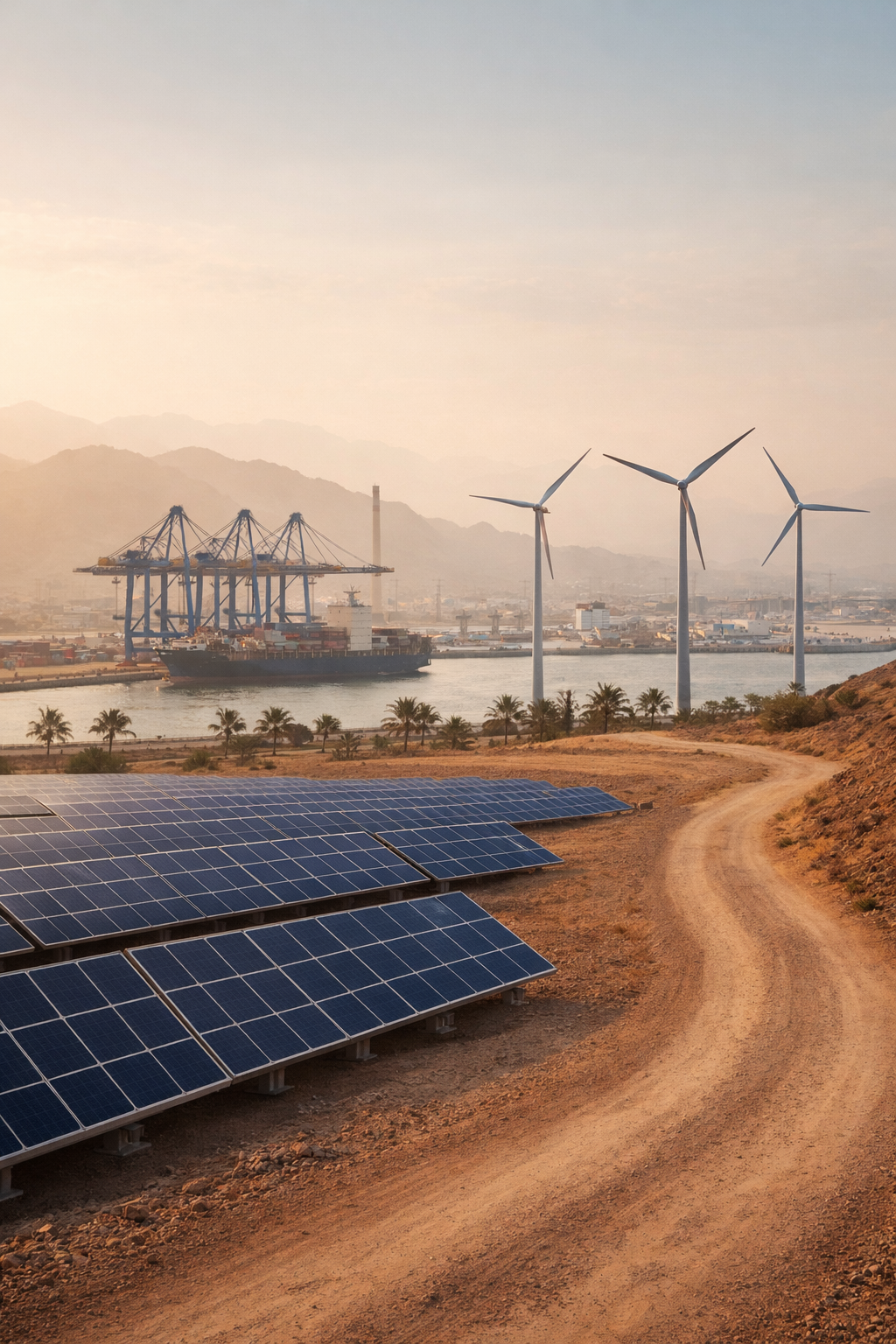
Political Economy, Institutional Reform & Inclusive Transition (2025–2028) The Gulf region is entering a decisive phase of economic transformation. As global markets shift toward low-carbon production, carbon border adjustments intensify, and fiscal pressures increase, the traditional hydrocarbon-anchored growth model faces structural limits. Green industrialisation is no longer a climate option — it is an economic necessity. The Advancing Green Industrialisation Dynamics in the GCC programme is a three-year strategic research initiative (2025–2028) examining how renewable energy, hydrogen, energy storage, green materials manufacturing, and circular economy industries can evolve into competitive, employment-generating value chains across the region. Anchored in Oman as a reform-oriented case study, the programme adopts a political-economy lens to analyse how governance structures, regulatory systems, public finance models, and industrial policy frameworks shape the transition. Rather than focusing solely on technology deployment, the programme investigates the institutional foundations of green industrial growth. It examines procurement systems, grid regulation, sovereign wealth fund strategies, local content frameworks, labour market readiness, and cross-border trade coordination. By analysing these structural determinants, the research identifies where reform is required to enable transparent, accountable, and economically viable industrial transformation. Oman represents both urgency and opportunity. Facing youth unemployment pressures, fiscal adjustment challenges, and a national diversification agenda under Vision 2040, the country is positioning itself as a hub for hydrogen, renewable energy, and clean industrial clusters. The programme studies how these ambitions interact with regulatory realities, investment risks, workforce capabilities, and regional cooperation dynamics — generating lessons relevant across the GCC. A central pillar of the initiative is structured policy engagement. Outputs will include policy briefs, thematic research papers, a flagship regional report, and academic publications. These will be complemented by internal seminars, public roundtables, and targeted workshops convening government institutions, regulators, sovereign wealth funds, industrial actors, research institutions, and civil society. Through this structured rhythm of dialogue, the programme aims to widen informed participation in economic policymaking and strengthen evidence-based reform pathways. Importantly, the initiative frames green industrialisation as a socio-economic transformation strategy — not simply a decarbonisation agenda. It evaluates employment multipliers, localisation potential, skill formation systems, investment governance, and long-term competitiveness under emerging global carbon constraints. The goal is to support economic resilience beyond hydrocarbon rents while fostering institutional coherence, regulatory clarity, and inclusive growth. By integrating technical modelling with political-economy analysis and stakeholder engagement, the programme contributes to building the institutional foundations required for a just, transparent, and economically sustainable energy transition in the Gulf. Over the 2025–2028 period, the initiative will provide independent, structured evidence to support decision-makers navigating one of the most consequential economic restructurings in the region’s modern history.

Read More

From Renewable Expansion to System Transformation: The Role of Energy Storage in Industrial Decarbonization

As renewable energy becomes central to achieving net-zero targets and deep CO₂ reductions, industrial zones face a structural challenge: large-scale renewable penetration requires system flexibility, dispatchability, and grid stability at levels not previously required. Majan Council’s Industrial Energy Storage Integration Strategy for Sohar Port & Freezone (SIPC) provides a deep, system-level assessment of how Energy Storage Systems (ESS) can enable renewable deployment at scale while preserving economic competitiveness and regulatory coherence. The study began with a comprehensive screening of 38 energy storage technologies, evaluated across five structured criteria groups covering technical maturity, grid integration capability, economic performance, environmental considerations, and deployment readiness. Following a rigorous multi-stage assessment, 29 technologies were shortlisted, with two ESS technologies ultimately selected as the most suitable for SIPC, based on scalability, cost resilience, industrial compatibility, and grid integration performance. Recognizing that storage requirements vary by location and load profile, the study also establishes that other industrial zones—such as Duqm—may require different ESS configurations, reinforcing the need for tailored system design rather than one-size-fits-all solutions. Economically, the strategy evaluates LCOS, peak/off-peak arbitrage potential, CRT and BST exposure, regulatory sensitivities, and cluster-level alignment with industrial demand growth. It quantifies how storage reduces peak tariff exposure, enhances renewable utilization, stabilizes long-term electricity costs, and supports new renewable additions from industrial tenants. From a regulatory standpoint, the study identifies key policy considerations including grid charging treatment, wheeling interaction, storage classification, and tariff duplication risks. It proposes structured engagement with APSR, OETC, OPWP, and MEM to ensure storage is positioned as a system-enabling asset within Oman’s evolving electricity framework. Technically, the assessment models storage sizing scenarios (14–16% load coverage), PV-priority versus grid-assisted charging strategies, reactive power support requirements, and integration within 400 kV transmission infrastructure under N-1 reliability conditions. This strategy positions energy storage not as an operational add-on, but as a critical infrastructure backbone for industrial decarbonization—strengthening grid resilience, enhancing tariff efficiency, and enabling large-scale renewable deployment in Sohar and beyond.
Read More

Hydrogen Transition Strategy for Industrial Decarbonization

From Transitional Pathways to a Competitive Green Hydrogen Ecosystem Sohar Port & Freezone (SIPC) represents the largest integrated industrial cluster in the Sultanate of Oman, contributing approximately three percent of national GDP and hosting energy-intensive sectors including steel, aluminum, methanol, petrochemicals, urea, polysilicon, and advanced manufacturing. These industries form the backbone of Oman’s export economy and industrial value chains. Sohar also constitutes the country’s largest hydrogen consumption hub, with an estimated demand of approximately 0.35 million tonnes per annum—nearly one-third of national hydrogen consumption. At present, the majority of this hydrogen is produced through natural gas-based steam methane reforming (SMR), creating exposure to gas price escalation, carbon risk, and increasing international competitiveness pressures, particularly in export markets such as Europe. While national strategic plans envision Sohar as a future green hydrogen hub by 2040, the transition from today’s grey hydrogen production to fully green hydrogen requires a structured, phased pathway. Majan Council’s Hydrogen Transition Strategy provides a comprehensive economic, regulatory, and system-level assessment of this pathway, examining how low-carbon hydrogen—including transitional models such as grid-based (yellow) hydrogen—can serve as a catalyst to accelerate infrastructure readiness, industrial adaptation, and ecosystem formation. The analysis evaluates the Levelized Cost of Hydrogen (LCOH) under multiple electricity pricing scenarios, including evolving CRT structures, and assesses sensitivity to gas price escalation and potential carbon policy impacts. It examines electrolyzer utilization rates, hybrid energy sourcing strategies combining renewable energy and grid supply, and the feasibility of progressively replacing existing SMR-based hydrogen consumption across different industrial sectors. Beyond pure cost comparison, the study assesses industrial replicability and the strategic implications of hydrogen substitution within export-oriented value chains. From a policy and regulatory perspective, the strategy identifies critical alignment requirements with MEM, Hydrom, and Oman’s National Hydrogen Strategy. It evaluates tariff design, grid pricing exposure, land allocation frameworks, cluster-level coordination, and export positioning under emerging carbon border mechanisms. The role of Carbon Capture, Utilization, and Storage (CCUS) is examined as both a transitional bridge and a structural enabler within Oman’s industrial decarbonization architecture. Technically, the assessment analyzes electrolyzer sizing, phased deployment scenarios, oxygen by-product valorization, and energy sourcing configurations, while identifying infrastructure constraints in hydrogen transport and storage systems. The study underscores that cluster-based infrastructure planning—rather than isolated project development—is essential to unlock scalable hydrogen deployment within Sohar’s industrial ecosystem. Ultimately, this Hydrogen Transition Strategy reframes hydrogen not merely as a future export commodity but as a strategic instrument of industrial transformation. By integrating economic modelling, regulatory reform pathways, gas market dynamics, infrastructure planning, and system engineering analysis, the strategy establishes a pragmatic roadmap in which transitional hydrogen solutions help build the ecosystem required for competitive green hydrogen in the long term. In doing so, Sohar is positioned not only as a future hydrogen hub, but as Oman’s first scalable industrial hydrogen transition cluster—anchoring competitiveness, decarbonization, and long-term industrial resilience.
Read More

Renewable Energy as a Competitiveness Lever: A Strategic Pathway for Industrial Decarbonization

The Renewable Energy Business Case provides a comprehensive economic, regulatory, and system-level assessment of enabling Oman’s industrial sector to achieve its decarbonization targets through large-scale renewable energy deployment in industrial zones such as Sohar Port & Freezone (SIPC). The analysis positions Sohar as a national anchor for industrial decarbonization and clean energy integration. From an economic perspective, the study evaluates competitiveness under different tariff structures (CRT, BST), wheeling mechanisms, grid charges, and evolving pricing scenarios. It assesses long-term cost trajectories, the impact of gas price escalation, potential gas savings, and the broader economic implications including job creation, investment attraction, and improved industrial cost stability. The analysis quantifies how renewable integration enhances industrial competitiveness while reducing exposure to fossil fuel price volatility. From a regulatory and policy perspective, the project identifies structural gaps within the current wheeling framework, tariff design, land lease structuring for renewable concessions, and institutional coordination across relevant entities. It provides targeted policy recommendations to enhance transparency, reduce regulatory uncertainty, and establish a bankable and investment-ready framework aligned with Oman Vision 2040 and national decarbonization objectives. From a technological and system perspective, the study assesses grid integration constraints, required transmission investments (shallow vs. deep), system reliability under N-1 criteria, and the readiness of the transmission network to accommodate large-scale PV deployment. It evaluates the role of utility-scale renewable energy in supporting industrial load growth while maintaining grid stability and resilience. Overall, the RE Business Case analysis reframes renewable energy from a compliance requirement into a strategic economic instrument that strengthens industrial competitiveness, enhances energy security, supports gas optimization, and accelerates Sohar’s transition toward a low-carbon industrial future.
Read More

Bridging the Clean Sector Gap: Education, Skills, and Workforce in Oman (LMIA)

Oman’s clean energy and industrial transformation will ultimately be constrained not by capital or technology, but by workforce readiness. As new sectors such as renewable energy, hydrogen, advanced manufacturing, and clean industrial services expand, the alignment between education systems and labour market needs becomes a decisive factor in national competitiveness. The “Bridging the Clean Sector Gap” assessment examines structural mismatches between Oman’s education output and the evolving demands of the clean economy. It identifies two primary forms of skills mismatch: a priority mismatch, where education providers emphasise emerging or theoretical competencies that do not fully reflect employer needs, and a depth mismatch, where graduates lack applied, experience-based skills required for immediate workforce integration. While confidence in educational attainment remains high among jobseekers, employers consistently report gaps in applied technical capability, cross-disciplinary knowledge, and workplace readiness. The analysis highlights foundational skills gaps—particularly in communication, numeracy, and applied technical literacy—that affect employability across sectors. Although Oman’s higher education institutions provide strong foundations in core engineering and scientific disciplines, sector-specific and cross-cutting skills—especially in vocational and applied training—require strengthening. Rather than relying on narrow specialisations, the report recommends integrating green skills across broader academic and technical programmes to support workforce flexibility. Persistent employment barriers in the green economy further complicate the transition. Entry-level applicants frequently encounter experience requirements that exclude new graduates, while firms often prioritise upskilling existing staff over recruiting young talent. At the same time, Omanisation remains uneven: high in public and generalist roles, but limited in highly specialised technical occupations where expatriate reliance persists. The study cautions against reactive labour-market interventions that risk distorting incentives or undermining regulatory standards. Instead, it advocates for a balanced approach combining short-term employment programmes with long-term industrial development strategies that generate sustainable demand for domestic talent. Institutional reform emerges as a central theme. Regulatory hurdles, including lengthy curriculum approval processes, inhibit the development of green-sector programmes. Cross-sector coordination between education providers, regulators, and industry remains limited, leading to missed Omanisation windows and fragmented training investments. The analysis calls for streamlined approval pathways for priority sectors, stronger university–industry partnerships, joint curriculum development, expanded “train-the-trainer” initiatives, and improved credibility and quality of domestic training providers to reduce dependence on international institutions. Finally, the study underscores that workforce development cannot be treated as a standalone labour policy. Clean sector employment requires coordinated economic planning, investment alignment, and policy signalling to ensure that education pipelines correspond with actual sector expansion. Regional coordination within the GCC is also essential to avoid duplication, enhance complementarity in value chains, and create broader employment ecosystems. “Bridging the Clean Sector Gap” reframes workforce readiness as a strategic economic pillar of Oman’s clean transition. By aligning education reform, skills development, Omanisation strategy, and industrial policy, the report establishes a pathway toward a resilient, employment-generating clean economy that supports long-term national stability and competitiveness.
Read More

Strategic Workforce Alignment for Clean Energy and Industrial Diversification (LMIA)

Building Workforce Readiness The Oman Clean Energy Labour Outlook represents the most comprehensive and forward-looking assessment of employment potential in Oman’s clean economy to date. Developed under the Labour Market Intelligence Analysis (LMIA), the outlook combines international benchmarks, local sector data, and bottom-up employment modelling to evaluate how renewable energy, hydrogen, energy efficiency, and green industrial sectors can contribute to sustainable job creation under different economic and policy scenarios. The analysis confirms that the clean economy holds real, though not unlimited, potential for employment generation in Oman. While clean sectors alone will not fully resolve national labour market imbalances, they constitute a strategic pillar for long-term job creation, skills development, and industrial diversification. However, the scale and durability of employment outcomes are highly sensitive to external market conditions, geopolitical shifts, global climate policies, and the sequencing of domestic project deployment. Scenario modelling demonstrates that employment outcomes vary significantly depending on investment timing, sector prioritization, and regulatory clarity. A key finding of the outlook is that workforce development must be strategically sequenced over time. Employment in many clean energy sectors peaks during construction and project development phases but stabilizes during long-term operations and maintenance (O&M), where vocational roles dominate. Without careful planning, early project rollouts may generate temporary labour surges without creating sustained employment pathways for Omani nationals. Stable job creation requires distributed project pipelines and long-term investment visibility. The outlook also highlights structural localisation challenges. Current clean energy sectors in Oman remain thinly staffed by international standards, with limited vocational-level participation by nationals, particularly in technical and plant operation roles. Omanisation remains uneven across the value chain, with expatriate workers continuing to dominate certain specialised segments of manufacturing, project development, and plant operations. At the same time, the skills required in green sectors are often extensions of existing engineering, IT, and management capabilities, suggesting that targeted upskilling and redeployment strategies can bridge much of the workforce gap without requiring entirely new academic disciplines. The report further underscores that Oman’s vocational education and training system is not yet fully prepared to meet anticipated demand from clean sectors. Curriculum alignment, applied training infrastructure, and stronger university–industry partnerships are essential to translate clean economy investments into sustainable domestic employment. Education systems must adapt without overexpanding, focusing instead on quality, alignment, flexibility, and career pathway clarity. Ultimately, the Oman Clean Energy Labour Outlook reframes workforce readiness as a central pillar of economic transformation. Employment outcomes in the clean economy depend not only on sector profitability, but on policy coherence, education reform, coordinated investment planning, and realistic localisation strategies. By aligning project pipelines, industrial policy, and workforce development, Oman can convert clean energy expansion into durable employment, industrial capability, and long-term economic resilience.
Read More

Developing Clean Energy Industries and Workforce (LMIA)

Strategic Case Study Insights for Oman’s Industrial Transformation The “Developing Clean Energy Industries and Workforce” analysis distills strategic lessons from international case studies to inform Oman’s approach to building competitive clean energy sectors and sustainable employment ecosystems. Drawing on experiences from Germany’s solar industry, Saudi Arabia’s electric vehicle sector, the Netherlands’ wind power industry, and Morocco’s automotive and EV transition, the study examines how different countries have structured industrial policy, investment sequencing, and workforce alignment to support emerging energy sectors. The case studies demonstrate that sector development requires balancing ambition with realism. Successful transitions are rooted in intrinsic market demand, strategic geographic positioning, and coordinated industrial policy—not solely in subsidies or short-term incentives. Countries that built integrated ecosystems—rather than fragmented production segments—were better able to generate sustainable employment, domestic value creation, and long-term competitiveness. Conversely, rapid expansion without structural resilience exposed sectors to volatility and fiscal strain. A central lesson is that education and labour-market policies must be tightly aligned with industrial strategy. Workforce development cannot precede sector clarity, nor can it lag behind industrial deployment. Countries that succeeded in scaling new energy industries invested early in vocational training, apprenticeships, and applied technical education while maintaining flexibility in higher education systems to adapt curricula in response to evolving technological needs. Institutional agility and regulatory responsiveness proved critical to maintaining alignment between investment flows and workforce readiness. The case studies further reveal that vocational training and practical skills development are foundational to long-term employment stability in clean energy sectors. While project development and construction phases generate short-term labour peaks, durable employment is concentrated in manufacturing, operations, maintenance, and supply-chain integration. Targeted upskilling and redeployment strategies—particularly from adjacent engineering and technical disciplines—were more effective than creating entirely new academic specializations. For Oman, these insights translate into a clear strategic direction. Industrial sector selection must prioritise ecosystem formation, domestic value chains, and complementarities within the GCC. Education systems must adapt through flexibility, industry partnerships, and strengthened technical training rather than expansion alone. Regulatory frameworks must enable workforce mobility, encourage private-sector participation, and reduce approval bottlenecks that delay programme development. Ultimately, the case study insights reinforce that clean energy industrialisation is not purely a technological transition—it is an institutional, economic, and workforce transformation. Sustainable sector development depends on coordinated policy design, strategic foresight, labour-market alignment, and disciplined execution. By embedding these lessons into national planning, Oman can build clean energy industries that generate employment, enhance resilience, and strengthen long-term economic competitiveness.
Read More

Foresight for Resilient Clean Energy and Industrial Transformation (LMIA)

The Labour Market Intelligence Analysis (LMIA) represents a forward-looking national assessment designed to evaluate how Oman’s clean energy and industrial transition can remain resilient under divergent global futures. The study applies strategic foresight and scenario analysis to examine how economic, labour-market, and policy choices will shape Oman’s long-term competitiveness and stability within the emerging clean economy. Recognizing that sector selection is inherently context-dependent, the analysis moves beyond identifying a single “best” sector and instead evaluates portfolios of opportunities under varying global conditions. It assesses how financial performance, employment generation, and strategic resilience must be balanced within an integrated national development framework. The study underscores that long-term economic stability cannot rely solely on short-term financial optimisation; rather, it requires dynamic industrial policy, employment-centered growth, and coordinated national action. The LMIA identifies energy efficiency, solar PV development, and mineral and metal processing as among the most promising sectors within Oman’s clean-economy transformation, particularly when embedded within integrated industrial ecosystems. The analysis emphasizes that value-chain development and ecosystem integration—rather than isolated sector growth—are essential to achieving scale, competitiveness, and sustainable employment outcomes. From a policy perspective, the report highlights the importance of sequencing environmental and climate actions along cost-abatement curves, aligning labour-market development with sector prioritization, and strengthening institutional coordination across economic and industrial domains. It calls for strategic public investment, employment-linked economic planning, and proactive governance mechanisms capable of responding to global market volatility, technological change, and geopolitical shifts. The study further stresses the necessity of regional coordination within the GCC to avoid duplication, enhance complementarity across value chains, and unlock shared industrial advantages. Enhanced regional engagement is positioned as a pathway to co-investment, shared infrastructure, and long-term economic resilience. Ultimately, the LMIA reframes Oman’s clean energy transition not as a narrow energy policy challenge, but as a comprehensive economic transformation agenda. By integrating foresight analysis, sector prioritization logic, labour-market alignment, and regional coordination strategies, the report establishes a resilient roadmap for industrial diversification, employment generation, and strategic positioning in the evolving global clean economy.
Read More