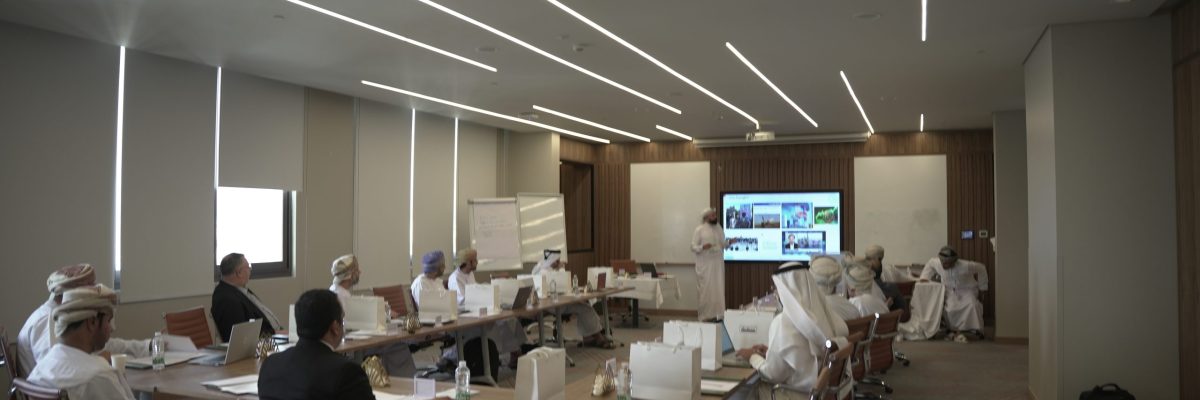
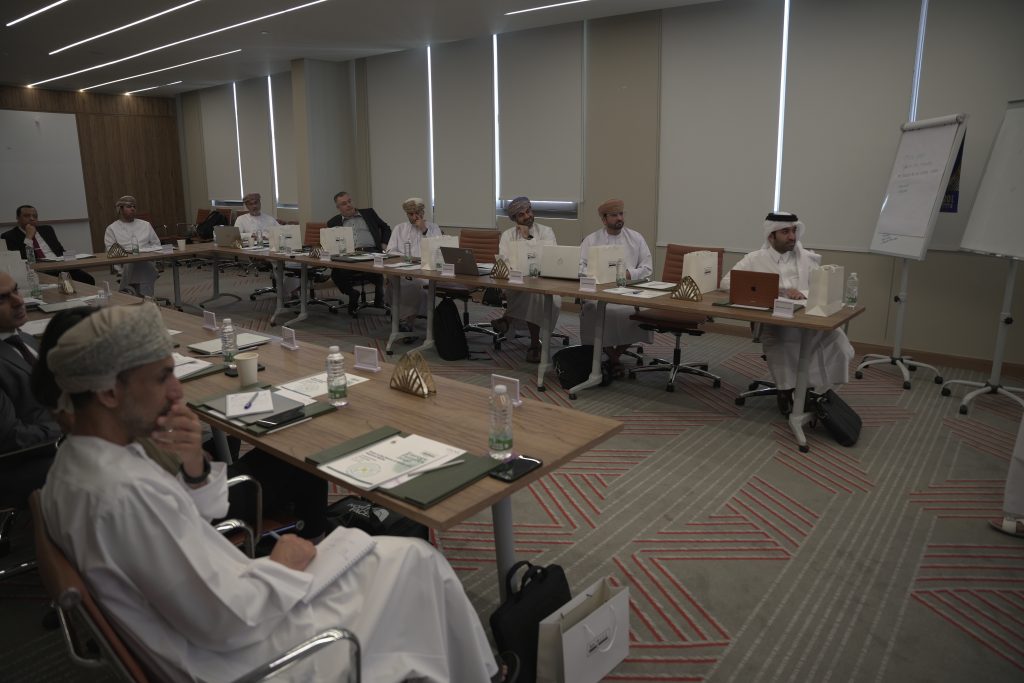
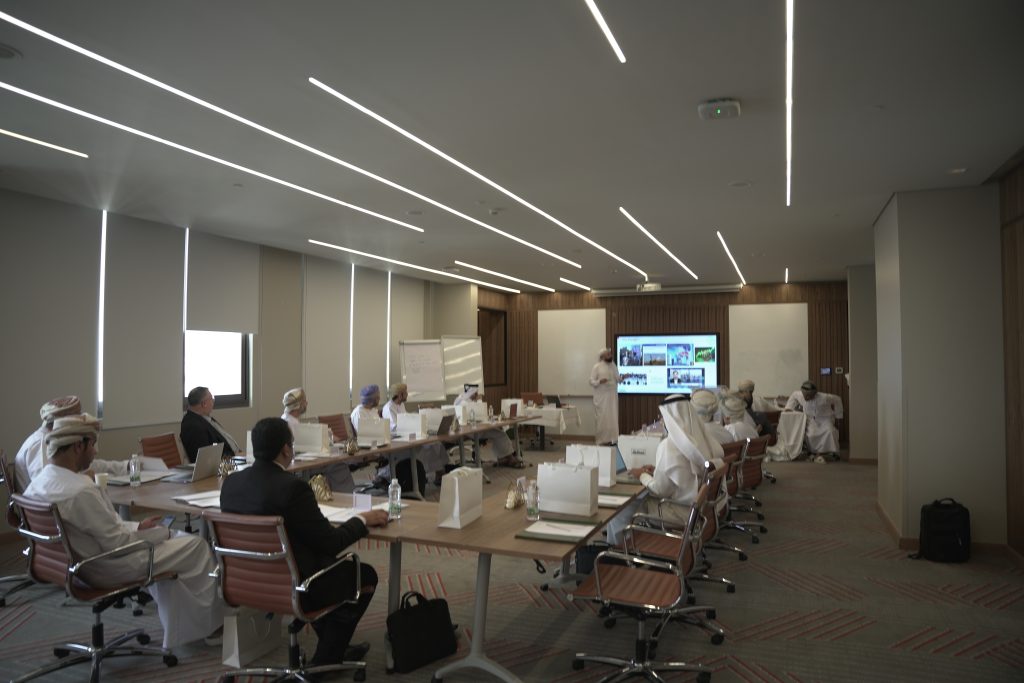
This foresight exercise explores how global, regional, and local developments could shape Oman’s energy economy by 2040. The goal is not to predict one future, but to develop a set of plausible scenarios that help decision-makers prepare for uncertainty and make better-informed strategic choices.
The workshop recognizes that the global energy system is undergoing structural change: decarbonization, new “green” industries, shifting supply chains, geopolitical tensions, and evolving climate policies. These forces will significantly influence Oman as both an energy producer and an emerging clean-energy hub.
Within the Labour Market Intelligence Analysis (LMIA) framework, the scenarios help evaluate how different energy sectors may thrive — or struggle — under changing external conditions. They also provide a reference point to assess employment potential, economic value, and policy options.
Participants are introduced to key foresight concepts:
Foresight — a structured, participatory process to explore uncertainty and identify strategic implications. Scenarios — not predictions, but narratives of alternative plausible futures that reveal risks, opportunities, and “unknown unknowns.”
The method relies on structured analytic techniques: identifying assumptions, assessing drivers and uncertainties, building alternative future narratives, and then “backcasting” to examine strategies that would work under different futures.
Key focus areas include:
innovation races and global supply chains
cooperation dynamics within the GCC
climate policy shifts and their economic impacts
changing global power structures and their effects on producer economies
Ultimately, the exercise equips policymakers and stakeholders with tools to test ideas, stress-test strategies, and design resilient pathways for Oman’s energy transition, labour market, and economic planning through 2040.